
Antibiotic Resistance: A Growing Threat to Global Health
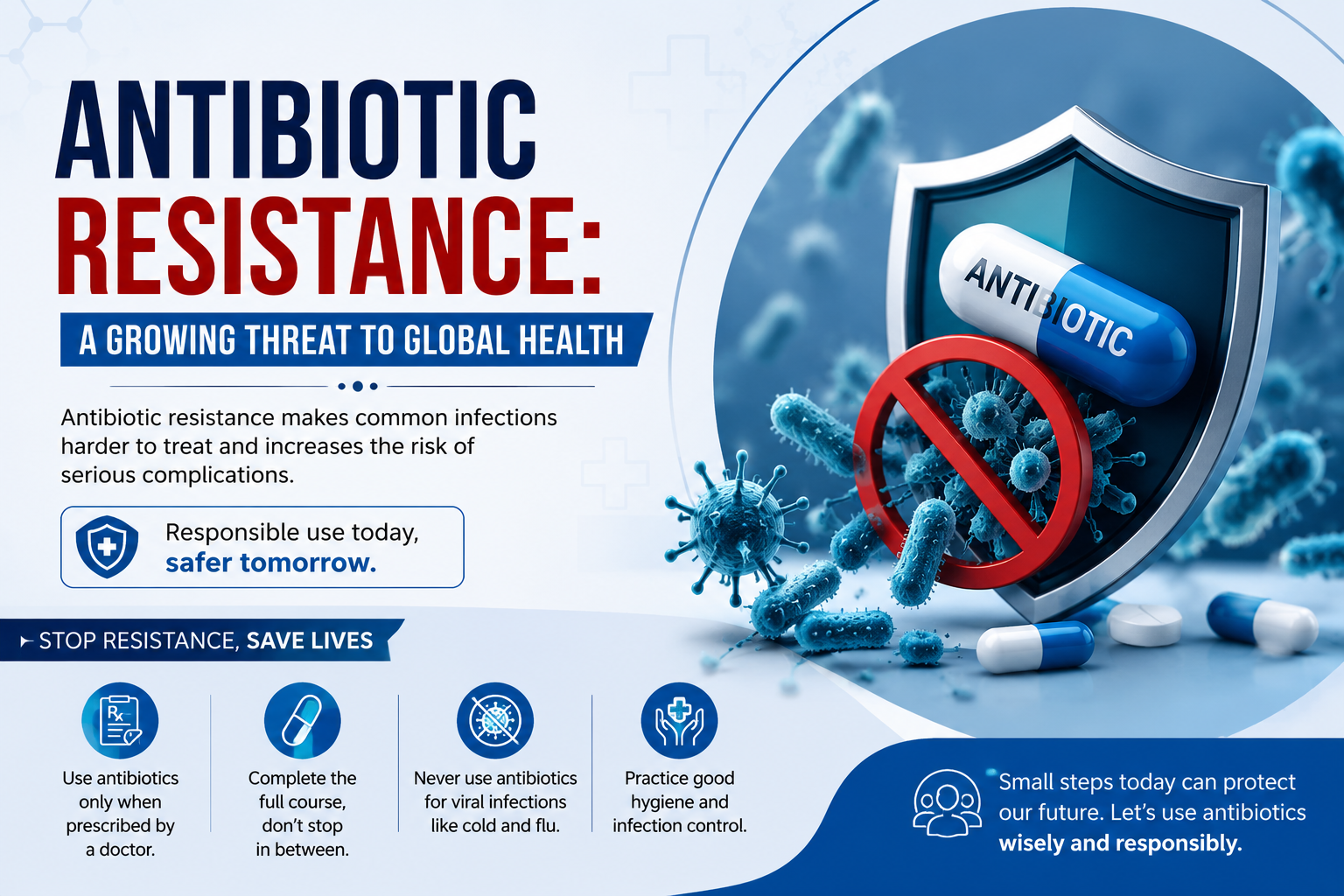
Antibiotic resistance is a growing global health threat where bacteria become stronger and stop responding to commonly used antibiotics. This makes infections harder to treat, increases recovery time, and raises the risk of serious complications. Responsible antibiotic use and public awareness are essential to control this rising problem.

vision-plus
admin@visionplushealthcare.com
Antibiotic resistance is one of the most serious public health challenges facing the world today. It occurs when bacteria evolve and develop the ability to survive antibiotic treatments that were once effective. As a result, infections that were previously easy to cure are now becoming difficult to treat, leading to prolonged illness, increased healthcare costs, and a higher risk of complications.
The primary cause of antibiotic resistance is the misuse and overuse of antibiotics. Many individuals consume antibiotics without proper medical advice, use them for viral infections such as cold and flu, or discontinue the prescribed course early once symptoms improve. These practices allow bacteria to survive, adapt, and become stronger over time. Resistant bacteria can then spread rapidly through hospitals, communities, and contaminated food or water sources.
The consequences of antibiotic resistance are severe and far-reaching. It not only affects the treatment of routine infections but also threatens the safety of major medical procedures such as surgeries, organ transplants, and cancer therapies, which depend heavily on effective antibiotics for infection prevention. If this issue continues to grow, even minor infections may become life-threatening in the future.
To control antibiotic resistance, it is essential to promote responsible antibiotic usage, ensure antibiotics are taken only under medical supervision, and complete the full course of treatment. Public awareness, strict regulations, improved infection control measures, and continued research for new antibiotics are critical steps to safeguard global health and protect future generations.