

Gut Health and Immunity: The Hidden Connection You Must Know
Discover how gut health directly impacts immunity. Learn about the gut microbiome, signs of poor digestion, and the best foods, probiotics, and habits to boost immunity naturally.

vision-plus
admin@visionplushealthcare.com
Gut Health and Immunity: The Hidden Connection You Must Know
Most people believe immunity depends only on vitamins, supplements, and seasonal medicines. But modern research shows that your immune system is strongly connected to your gut health. In fact, a large part of your body’s immune cells are present in the digestive system, making the gut one of the most important organs for protection against infections.
In this blog, we will explore how gut health impacts immunity, the role of the microbiome, and practical ways to strengthen your gut naturally.
What is Gut Health?
Gut health refers to how well your digestive system functions. A healthy gut means:
- Proper digestion and absorption of nutrients
- Balanced gut bacteria
- Smooth bowel movements
- No frequent bloating or acidity
- Strong intestinal lining
When the gut is unhealthy, it can lead to digestion problems, low energy, and weaker immunity.
What is the Gut Microbiome?
Your gut contains trillions of bacteria, viruses, and microorganisms. This community is called the gut microbiome.
Not all bacteria are harmful. In fact, many bacteria are beneficial and help in:
- Breaking down food
- Producing vitamins like B12 and K
- Maintaining gut lining
- Fighting harmful bacteria
- Supporting immunity
A healthy microbiome is all about balance between good bacteria and harmful bacteria.
How Gut Health Controls Your Immune System
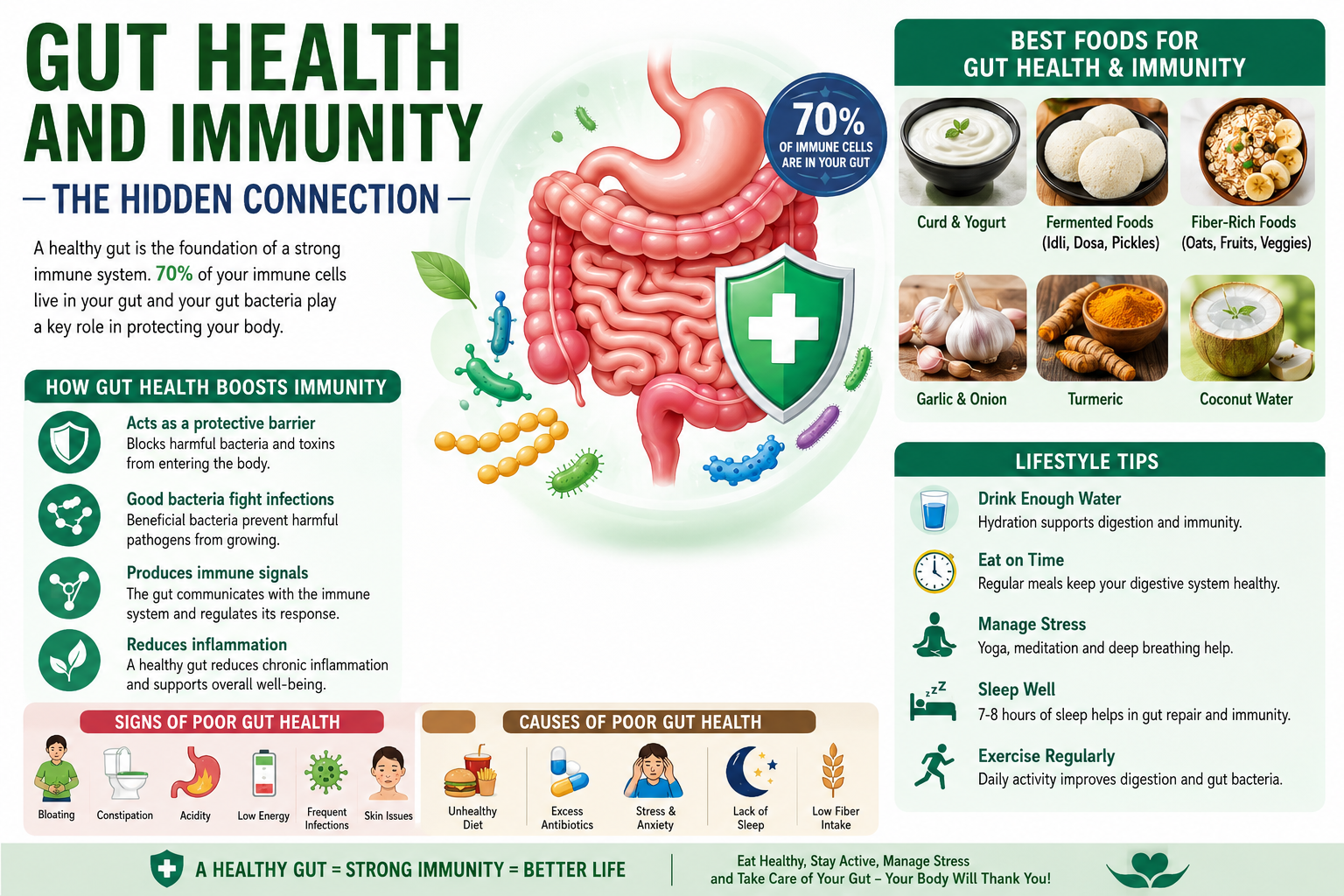
A surprising fact is that around 70% of the immune system is linked to the gut.
Here’s how the gut supports immunity:
1. Acts as a Protective Barrier
The gut lining acts like a wall that blocks harmful bacteria and toxins from entering the bloodstream.
If the gut lining becomes weak, harmful particles can pass through, leading to inflammation. This condition is often referred to as leaky gut syndrome.
2. Good Bacteria Fight Infections
Healthy gut bacteria help prevent the growth of harmful bacteria and viruses by competing for space and nutrients.
3. Gut Produces Immune Signals
The gut communicates with the immune system and controls how your body reacts to infections, allergies, and inflammation.
4. Reduces Chronic Inflammation
An unhealthy gut can cause chronic inflammation, which is a major reason behind weak immunity and lifestyle diseases.
Signs Your Gut Health is Poor
Many people ignore early warning signs. Common symptoms of poor gut health include:
- Frequent gas and bloating
- Constipation or loose motion
- Acidity and heartburn
- Food intolerance (milk, gluten, spicy foods)
- Weak immunity and repeated infections
- Skin issues like acne or eczema
- Fatigue and low energy
- Bad breath
- Mood swings and anxiety
If you experience these regularly, your gut may need attention.
Common Causes of Poor Gut Health
Gut imbalance is becoming very common in India due to lifestyle changes. Major causes include:
1. Unhealthy Eating Habits
Fast food, oily snacks, packaged foods, and sugary drinks harm the microbiome.
2. Excess Antibiotic Use
Antibiotics kill harmful bacteria but also destroy good bacteria, weakening gut immunity.
3. Stress and Anxiety
Stress affects digestion and gut bacteria balance, leading to acidity, IBS, and poor immunity.
4. Lack of Sleep
Poor sleep disrupts the gut’s natural repair process.
5. Low Fiber Intake
Fiber is essential for feeding good gut bacteria. Without fiber, good bacteria reduce.
Best Foods for Gut Health and Strong Immunity
The easiest way to improve gut health is through diet. These foods naturally strengthen the microbiome:
1. Curd and Yogurt
Rich in probiotics (good bacteria) and very common in Indian diets.
2. Fermented Foods
Foods like idli, dosa, kanji, pickles (homemade), and buttermilk support gut bacteria.
3. Fiber-Rich Foods
Good bacteria feed on fiber. Include:
- Oats
- Whole wheat
- Brown rice
- Fruits (banana, apple, papaya)
- Vegetables (carrot, spinach, beans)
4. Garlic and Onion
They act as natural prebiotics and support immunity.
5. Turmeric
A powerful anti-inflammatory spice that supports gut lining and immune response.
6. Coconut Water
Helps hydration and digestion, especially during summer.
Probiotics vs Prebiotics: What’s the Difference?
Many people get confused between probiotics and prebiotics.
Probiotics
These are live good bacteria that improve gut balance.
Example: curd, yogurt, probiotic capsules.
Prebiotics
These are food for good bacteria, mainly fiber-based.
Example: banana, garlic, onion, oats.
For best results, the body needs both probiotics and prebiotics.
Lifestyle Tips to Improve Gut Health Naturally
Gut health is not only about food. Your lifestyle plays a big role.
1. Drink Enough Water
Hydration supports digestion and prevents constipation.
2. Eat on Time
Irregular meals disturb digestion and increase acidity.
3. Avoid Unnecessary Antibiotics
Only take antibiotics when prescribed by a doctor.
4. Manage Stress
Yoga, walking, meditation, and deep breathing improve gut function.
5. Get Proper Sleep
7–8 hours of sleep helps the body repair gut lining and immune cells.
6. Exercise Regularly
Daily walking improves digestion and supports gut bacteria diversity.
Gut Health in Indian Diet: What to Eat & Avoid
Best Indian Foods for Gut Health
- Homemade curd and buttermilk
- Moong dal khichdi
- Idli, dosa, dhokla
- Fruits like papaya and banana
- Coconut water
- Jeera water
- Light vegetable soups
Foods to Avoid
- Excess spicy food
- Deep fried snacks
- Packaged chips and bakery items
- Soft drinks and excessive sugar
- Excess tea/coffee
- Alcohol and smoking
When to Consult a Doctor
You should consult a doctor if you have:
- Frequent acidity and stomach pain
- Long-term constipation or diarrhea
- Blood in stool
- Sudden weight loss
- Severe bloating and cramps
- Weak immunity with frequent infections
Ignoring digestive issues can lead to chronic problems like IBS, ulcers, or gut inflammation.
Conclusion: Strong Immunity Starts in the Gut
Gut health is not just about digestion—it is the foundation of overall wellness. A balanced gut microbiome supports nutrient absorption, reduces inflammation, and strengthens immune defense.
If you want strong immunity, better energy, and fewer infections, start by improving your gut health through a healthy diet, stress control, and a balanced lifestyle.
Remember: A healthy gut means a healthier body.